The video is only loaded from YouTube once you click. Your IP address is then transmitted to Google, and Google may store data on your device. See the privacy policy for details.
CATS vs. ROBOTS - Can Chatbots ... Chat?
A Science Slam about chatbots and whether they can actually chat like humans - explained with cats!
Have you ever wondered if there is anything left humans are better at than AI - aside from correctly identifying traffic lights in photos? In this Science Slam presentation, I tackle a crucial question that is seldomly asked: Can chatbots actually chat (like humans can)? What is so special about human communication anyway? And why do I keep bringing up cats?
(The video is in German. Click here to see my English version)
Sources:
My Bachelor's thesis (in English)
Images credit
[KI] • All images of cats (KI3), stylized humans (KI1), chatbots (KI2), and scales (AI4) were generated by the Bing Image Creator
[01] • CAPTCHA
[02] • Vitruvian Man: https://en.wikipedia.org/wiki/Vitruvian_Man#/media/File:Da_Vinci_Vitruve_Luc_Viatour.jpg
[03] • White monitor: Image by rawpixel.com on Freepik
[04] • Image of the traffic-light coalition XX
[05] • Inspired by IKEA instruction manuals
[06] Coffee icon by Flaticon
[07] Laptop icon by Flaticon
[08] Brain icon by Flaticon
[09] • Icons from flaticon.com • LaTeX logo designed by Don Knuth and Leslie Lamport
[10] • Shown book: Giles, H. (2016). Communication Accommodation Theory: Negotiating Personal Relationships and Social Identities across Contexts. Cambridge University Press.
[11] • Image of Howard Giles from hogrefe eContent
[13] Pomegranate: https://www.pexels.com/photo/ripe-pomegranate-on-metal-plate-on-white-table-4230630/
Scientific sources
Devlin, K. (2006). Situation Theory and Situation Semantics. In Handbook of the History of Logic (Bd. 7, S. 601–664). Elsevier. https://doi.org/10.1016/S1874-5857(06)80034-8
Giles, H. (2016). Communication Accommodation Theory: Negotiating Personal Relationships and Social Identities across Contexts. Cambridge University press.
Giles, H., Coupland, N., & Coupland, J. (1991). Accommodation Theory: Communication, Context, and Consequence. In H. Giles, J. Coupland, & N. Coupland (Hrsg.), Contexts of Accommodation (1. Aufl., S. 1–68). Cambridge University Press. https://doi.org/10.1017/CBO9780511663673.001
Neuperti, L. (2024). Assessing Communicative Accommodation in the Context of Large Language Models.
Soto-Andrade, J. (2023). Does Structural Coupling Meet Sympoiesis?. 18(3), 371–742. https:// constructivist.info/18/3
Turing, A. M. (1950). I.—Computing Machinery and Intelligence. Mind, 59(236), 433–460. https://doi. org/10.1093/mind/LIX.236.433
White, E. J. (2020). A Unified Theory of Cats on the Internet. Stanford University Press.
Audio edition
Watch More
Who's Afraid of the AI Apocalypse?
A look behind the scenes of silicon valley's obsession with AI doom
Democracy, Design & Desire Paths
A Science Snack about the hidden design of the internet and what it is doing to our democracy
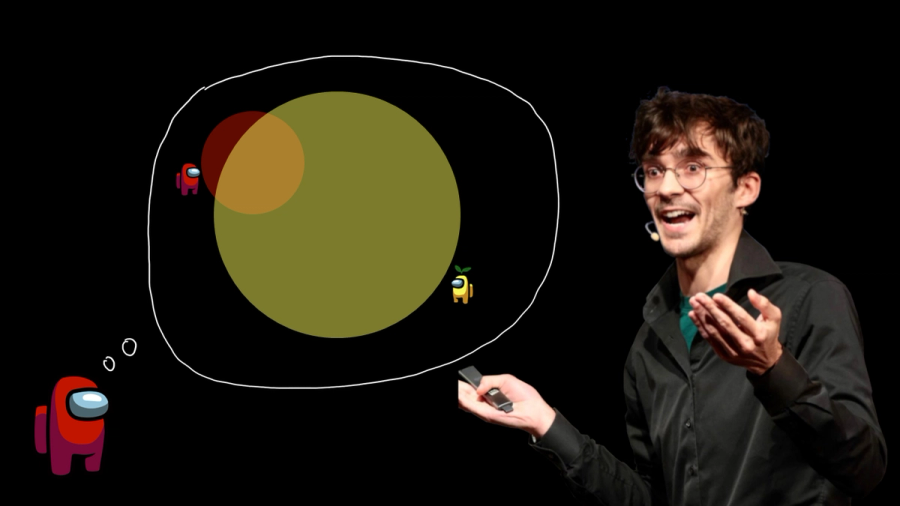
Am I scholarship-material?
Science Snack about Scholarships and Self-Images at the RMU Scholarship Fair
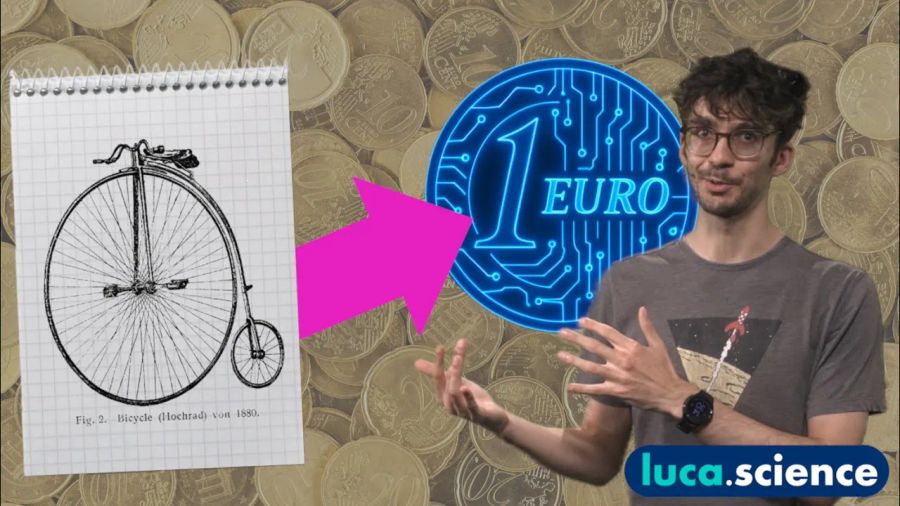
The Digitale Euro and ... Old Bikes? (Deep Dive)
A deep dive into the Digital Euro, cash and how old bicycles can help us understand how new technologies emerge

What's AI ... not?
Science Snack for the opening of the New Realities exhibition at the Museum of Communication

What is the Digital Euro? And does it help me with small talk?
A Science Snack on the narratives around the Digital Euro - enabled by the Centre Responsible Digitality (ZEVEDI)
Do we need a whisper-button? Online teaching during Corona
A Science Snack on my personal experience and research on uni during Corona - enabled by the Goethe University Frankfurt
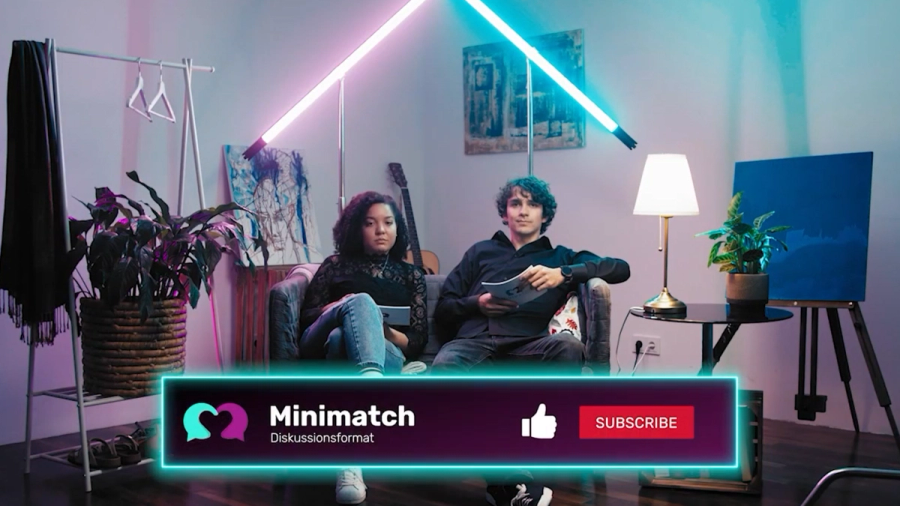
Mini Match - dating but political
A new YouTube discussion format where different political views meet in a dating-like context - enabled by the Evangelic Academy Frankfurt